

If you’ve ever felt like your daily dog walk is more of a tug-of-war competition than a relaxing stroll, you are definitely not alone. The struggle of a dog pulling on the leash is one of the most common and frustrating challenges dog owners face.
The good news? Training tools like the Halti No-Pull Harness can be a game-changer! But with so many options out there, how do you know if it’s the right choice for your furry friend?
Let’s dive into what makes the Halti No-Pull Harness unique, how to fit it for maximum comfort and effectiveness, and how it stacks up against other popular no-pull solutions.
What’s the Big Deal About the Halti No-Pull Harness?
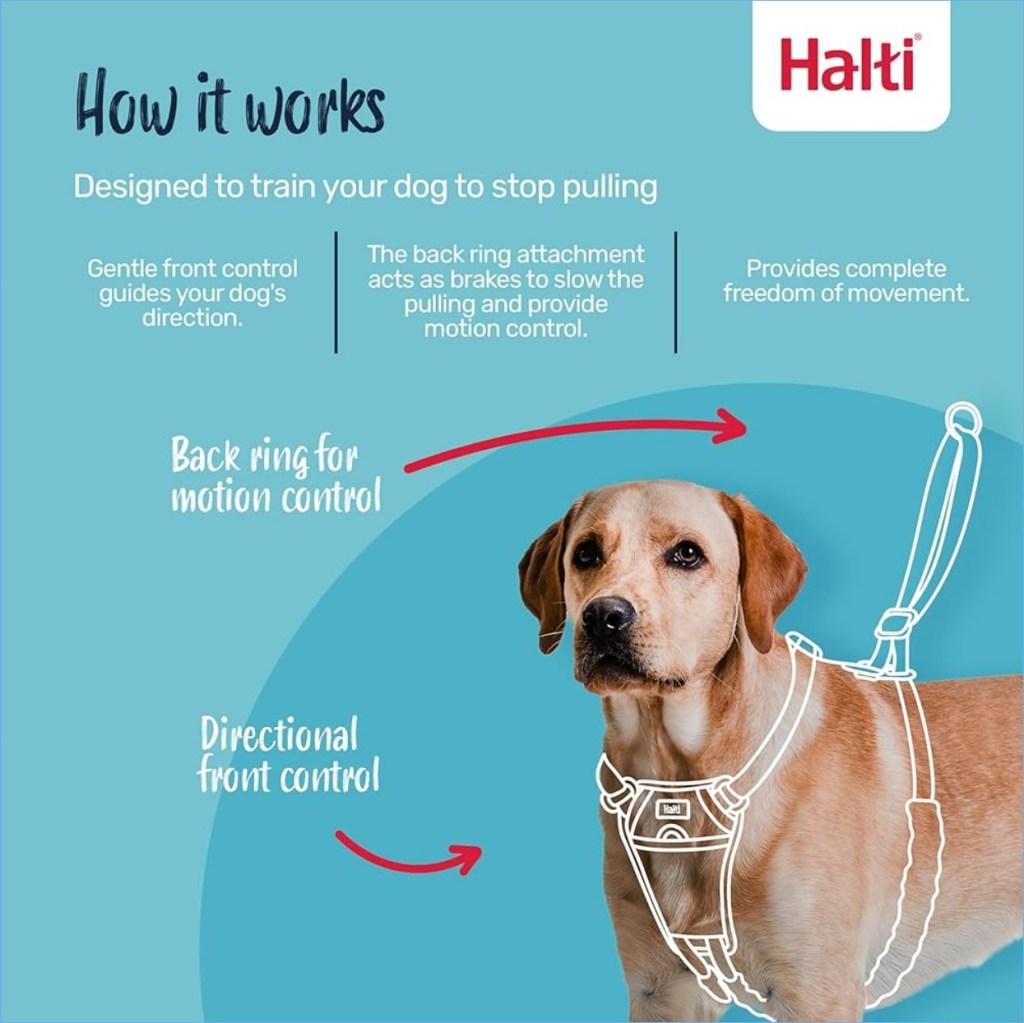
The Halti No-Pull Harness is designed to be a gentle yet effective training aid that gives you, the human, more control without causing your dog discomfort. Its effectiveness comes from a clever, dual-action system.
Key Benefits that Make a Difference:
• The Gentle “Stop-Pull” Action: The unique design includes padded leg sleeves and a system that gently tightens around your dog’s chest when they begin to pull. It’s a subtle, non-painful cue that discourages the pulling motion and encourages them to slow down. It’s all about making pulling less rewarding!
• Optimal Control with Dual Clips: The harness features two leash attachment points:
• The Back Clip: Standard for everyday walking.
• The Front Control Ring: For dogs who need extra steering and control, especially when paired with a double-ended training lead (highly recommended!). Clipping the lead here helps steer your dog to the side, preventing them from charging straight ahead.
• Built for Comfort: The design prioritizes your dog’s well-being with soft, durable webbing and under-arm sleeves to help prevent chafing, ensuring they stay comfortable even on longer adventures.
• Padded Chest Panel: A secure chest panel helps the harness stay in the correct position, preventing slipping and ensuring the “stop-pull” function engages effectively.
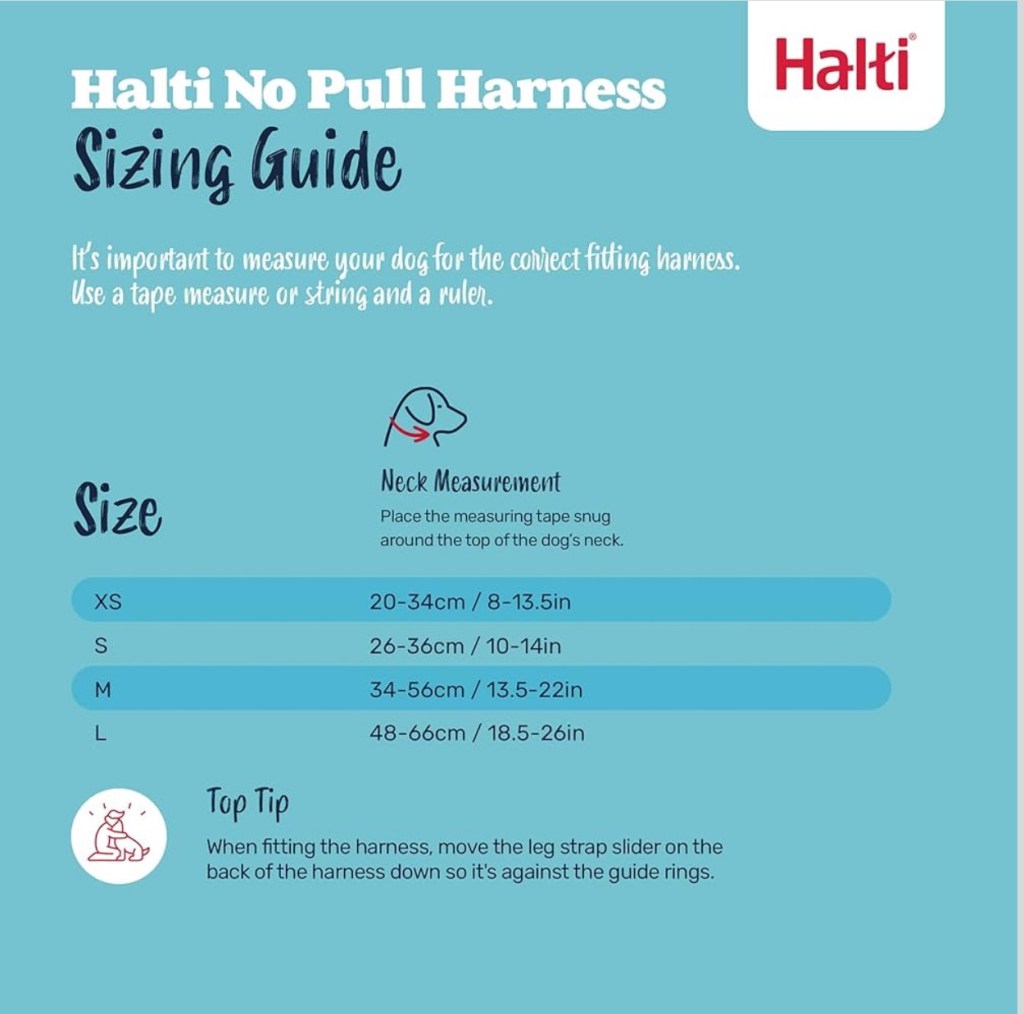
📏 Perfect Fit, Perfect Walk: How to Put on the Halti
Getting the right fit is crucial for any harness, especially a no-pull one. A poorly fitted harness can be ineffective or, worse, uncomfortable.
1. Measure and Choose Your Size: Before buying, measure your dog’s chest/girth, the widest part of their rib cage, right behind the front legs. Use the manufacturer’s sizing chart to select the right size (usually Small, Medium, or Large).
2. Initial Placement: Hold the harness with the padded chest piece facing you. You’ll place the neck strap over your dog’s head.
3. Lift the Paws: Carefully lift your dog’s front feet through the leg straps so they are positioned in the padded under-arm sleeves.
4. Adjust the Straps: Adjust the neck strap and the leg straps so they fit snugly but comfortably. You should be able to get one to two fingers between the strap and your dog’s body.
5. Secure the Slider: Slide the leg strap adjuster back down to about 5 cm above the guide rings (or as per the instructions) to ensure the gentle lifting action works when they pull.
6. The Safety Clip: Don’t forget to attach the safety link from the harness to your dog’s regular collar D-ring. This is a vital backup, ensuring the harness can’t slip off even if your dog is a professional escape artist.
Why I really love this product, is due to the simple but, effective way it helps your pet or client walk efficiently while on walks.
I use it for a few of my dogs and it works beautifully.
💡 A helpful tip: Introduce the harness slowly with positive reinforcement! Let your dog sniff it, give them treats while putting it on, and keep initial sessions short and fun. A new tool can feel strange, so be patient!
I am also including some comparisons of how other no-pull harnesses work compared to the Halti and what makes it so different. I am no way sponsored by Halti but, I love this tool so much I wanted to educate other pet owners.
I have also utilized a few of the below products before with success but, not every dog will work with every tool listed.
I have used the gentle leader and had dogs that adjusted just fine and others that never adjusted and absolutely hated walking on it.
I would not recommend the gentle leader for head shy dogs.
1. Front-Clip Harnesses (e.g., Easy Walk)
The most common alternative is a standard front-clip harness. The mechanism here is simple: the leash attaches to a ring on your dog’s chest. When your dog lunges or pulls, the leash pulls them gently to the side, redirecting their momentum back towards you.
• How it differs from the Halti: The standard front-clip harness relies only on steering and redirection. The Halti No-Pull Harness goes a step further by incorporating the gentle “stop-pull” action a subtle tightening around the chest and legs when the dog pulls. This dual-action mechanism can be more persuasive for very determined pullers.
2. Headcollars (e.g., Halti Headcollar, Gentle Leader)
Headcollars offer the highest level of control, working much like a halter on a horse. A loop goes over your dog’s muzzle and attaches under the chin. Because the leash controls the dog’s head direction, the body must follow.
• How it differs from the Halti: This is a completely different control strategy. Headcollars are fantastic for powerful pullers or highly reactive dogs where maximum immediate control is necessary. However, they require more dedicated training for acclimatization, as many dogs strongly dislike having their muzzle restricted. The Halti No-Pull Harness is generally much better accepted by dogs because it works on the body and chest, not the sensitive head or muzzle.
3. Freedom No-Pull Harness
Another popular choice is the Freedom No-Pull Harness, which often uses a front clip and a martingale loop at the back. When the dog pulls, this loop gently tightens around the torso.
• How it differs from the Halti: Both the Halti and the Freedom harness use a tightening action. However, the Freedom focuses its tightening action on the back/torso, while the Halti focuses its unique gentle lifting and tightening action on the front chest and under-arm area. Additionally, the Halti has the added benefit of the padded leg sleeves to maximize comfort during its stop-pull function.
The Halti Advantage:
The Halti No-Pull Harness stands out because it combines strategies. It offers the steering benefit of a front clip (especially when used with a double-ended lead) plus a unique, gentle body-response cue (the tightening/lifting action). This makes it an excellent choice for owners who want effective, dual-action control without resorting to head control.
Final Thoughts: Training is Key!
The Halti No-Pull Harness is an excellent training aid, but it’s not a magic bullet. For long-term success, pair the harness with positive reinforcement training. Reward your dog with praise or treats the second the leash goes slack. Consistency is the secret ingredient!
I also encourage everyone before picking look online and order a few different harness to try and see which will work best.
Happy walking! We hope your next outing is a peaceful partnership, not a wrestling match.

 Karma's Watch